The urgent situation in Morocco following the earthquake on Friday, September 8, has mobilized the insurance sector. What are the insurance-related challenges linked to this disaster?
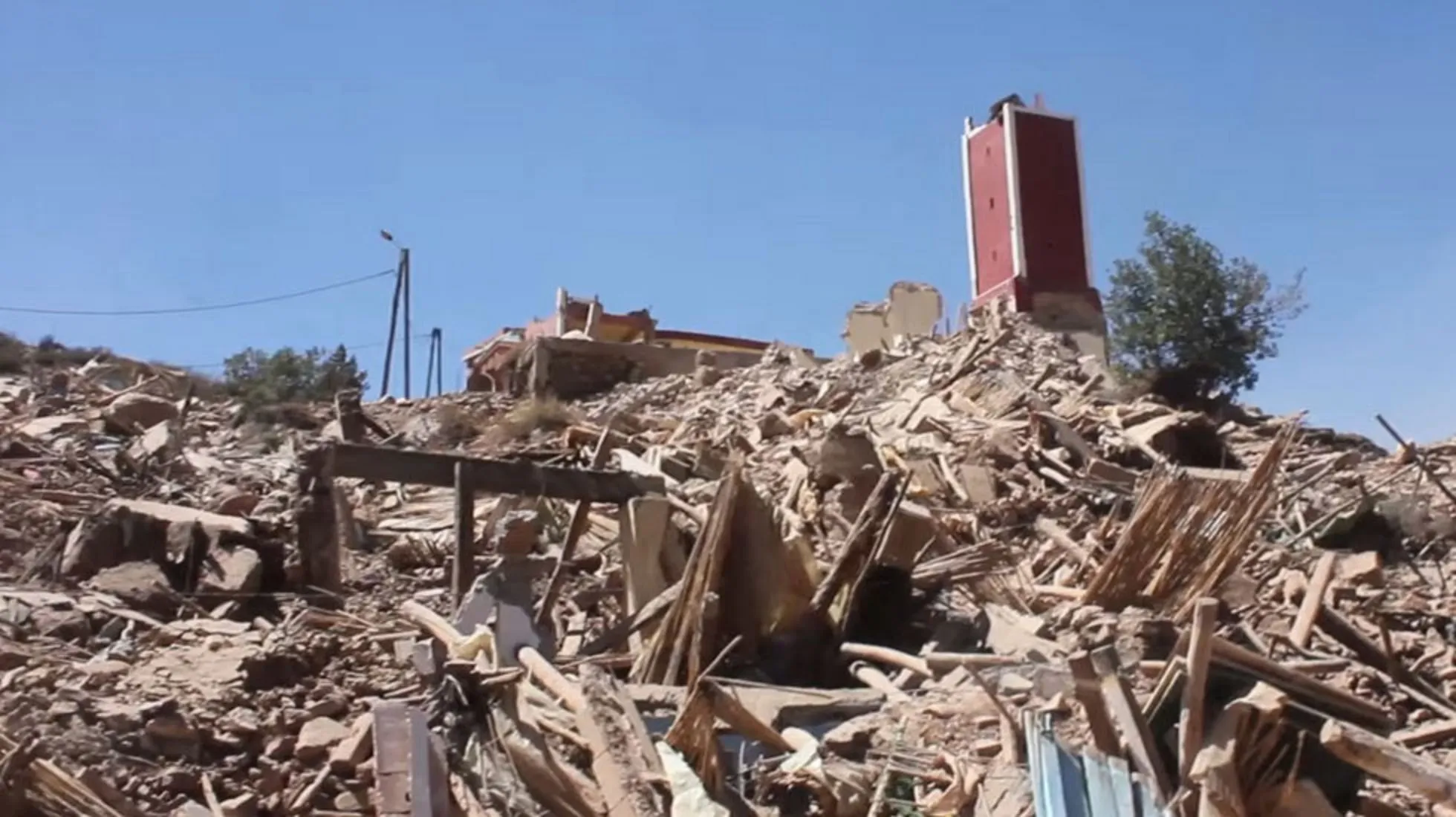
On September 8 at 11:11 p.m. local time, Morocco was struck by a devastating earthquake measuring 6.8 on the Richter scale. The epicenter of the quake was located in the southwestern region, near the city of Marrakech. Preliminary figures report at least 2,681 deaths and more than 2,400 injured. Among the victims, four French citizens lost their lives and fifteen others were injured. More than 300,000 people are believed to be affected, according to the WHO. Beyond the human toll, this natural disaster caused significant material destruction and inevitably raises the issue of insurance penetration in the kingdom.
On September 8 at 11:11 p.m. local time, Morocco was struck by a devastating earthquake measuring 6.8 on the Richter scale. The epicenter of the quake was located in the southwestern region, near the city of Marrakech. Preliminary figures report at least 2,681 deaths and more than 2,400 injured. Among the victims, four French citizens lost their lives and fifteen others were injured. More than 300,000 people are believed to be affected, according to the WHO. Beyond the human toll, this natural disaster caused significant material destruction and inevitably raises the issue of insurance penetration in the kingdom.
Chronic underinsurance?
“Losses for insurers in Morocco will be much lower than in Turkey,” said Jean-Paul Conoscente, CEO of SCOR’s P&C division, on Sunday on the sidelines of the Rendez-vous de septembre in Monaco. This is mainly explained by the nature and reality of the most affected areas (Al Haouz, Chichaoua, and Taroudant), which are largely composed of villages nestled in mountainous regions.
Me Nasser Benwahoud, attorney at the Casablanca Bar, explains: “The affected regions are mostly rural areas with very low levels of insurance coverage and insurability, given that constructions are traditional.” Indeed, the three impacted regions are characterized by homes built from earth or mud bricks, often constructed by the residents themselves.
On this matter, Thierry Léger, CEO of SCOR, stated: “These houses are not designed to withstand shocks. Even if owners intended to take out insurance, it would be difficult to offer coverage, as it is impossible to insure a dwelling that risks collapsing with every event, at least until they are built according to proper standards.”
An existing mechanism
The Moroccan insurance sector is one of the largest in Africa, generating a total business volume of 57.5 billion dirhams (around €5 billion) in 2022, with growth of 9.7%. The non-life insurance segment also grew by 6.6%, reaching premiums of 28.4 billion dirhams (around €2.5 billion). Motor insurance accounts for 48% of non-life insurance volume.
Similar to the French natural disaster compensation scheme (Cat Nat), Morocco introduced its own mechanism in 2020. Called EV CAT, this system aims to compensate for the consequences of catastrophic events. In addition to covering natural hazards such as floods and earthquakes, EV CAT can also be triggered in the event of terrorism. The system includes two compensation schemes: an insurance-based system for insured victims, and an assistance-based system for those without coverage. The latter are supported through the Solidarity Fund Against Catastrophic Events (FSEC). This fund covers any individual who has suffered bodily harm or whose primary residence has been rendered uninhabitable by a disaster. In 2021, the FSEC’s operating revenues amounted to 235 million dirhams (around €22 million). Me Nasser Benwahoud also notes that “the Moroccan government has created a special fund to receive donations, which will be used to provide necessary aid to victims.”
Regarding EV CAT, the cost of the guarantee is set at 8% of the insurance premium. Compensation is capped at 2 million dirhams (around €180,000). The deductible is 10% of the damage amount, with a minimum of 7,000 dirhams (around €650). As with the French Cat Nat system, “for insured properties, one must wait for the government decree recognizing the state of natural disaster in order to trigger the coverage,” explains Me Nasser Benwahoud.